Showing posts with label Life. Show all posts

Tuesday, 21 February 2012

Matsuri 祭り


Matsuri is the Japanese word for festival. There are many many different matsuris that take place all over Japan. It is kind of hard to imagine any town not having at least one to call their own! Some of the common themes/purports of matsuris are the coming of new seasons, the honouring of ancestors and their spirits and making an appeal to the gods for bountiful harvests and safe journeys. When you are planning a trip to Japan, it would be remiss of you to not try and plan around the timing of a Japanese matsuri.

Being a first world country, the smart phone-toting, traffic jam-participating, Calvin Klein handbag-wearing modern Japanese people, at least superficially, lead a lifestyle that resembles those of persons from other first world countries. Thankfully, the matsuri presents a great chance to see Japanese people let all that go away for a day and step back in time to acknowledge their rich culture and traditions. The typical matsuri features dancing, singing, chanting, the playing of traditional instruments, feats of strength as the locals carry or tow portable shrines (mikoshi 神輿 and/or dashi 山車), the donning of traditional garb (especially 'happi' ハッピ), and of course, lots of food. Some matsuris have bonfires, some have lanterns. Some are completely on the land, some take place on or in the water. Variety indeed abounds.


In my time over here, I've been to a few. My very first one was the Ohara Hadaka matsuri 大原裸祭り, a festival that takes place each Autumn in Ohara, Chiba (east of Tokyo). The main draw card for this one is the shio-fumi 汐踏み ritual (translates to "treading on the sea water"). Numerous teams of loincloth-appareled men and boys carry large mikoshi from the apex of a sand dune and down into the sea! These heavy mikoshi are supported by two large beams of solid wood so it is no wonder that each team has approx 20 people carrying them.


At their most daring, the mikoshi bearers go out to about upper chest height at which point they chant and turn and head back to shallower ground. On return to land (and sometimes just before) the teams begin to rotate the mikoshi and later, in a great feat of strength, propel them up into the air with the 'heave-ho' equivalent, "Yo-ii-sho!" shouting proudly from their lips. I don't know if you can insure these expensive mikoshi or not, but for the Ohara mikoshi, the premiums would surely make you cry. 


The whole ritual is performed to grant the particpants with luck and prosperity as well as to appeal to the gods of the shrines to bless them with good harvests of fish. Apparently the more spirited and rowdy the performance is, the more satisfied the gods will be! On completion of the main event the men, boys, and now, women and girls, return the mikoshi back to their home shrines. Often stopping along the way for a drink stop and spirited song. I can't wait to go to this one again.


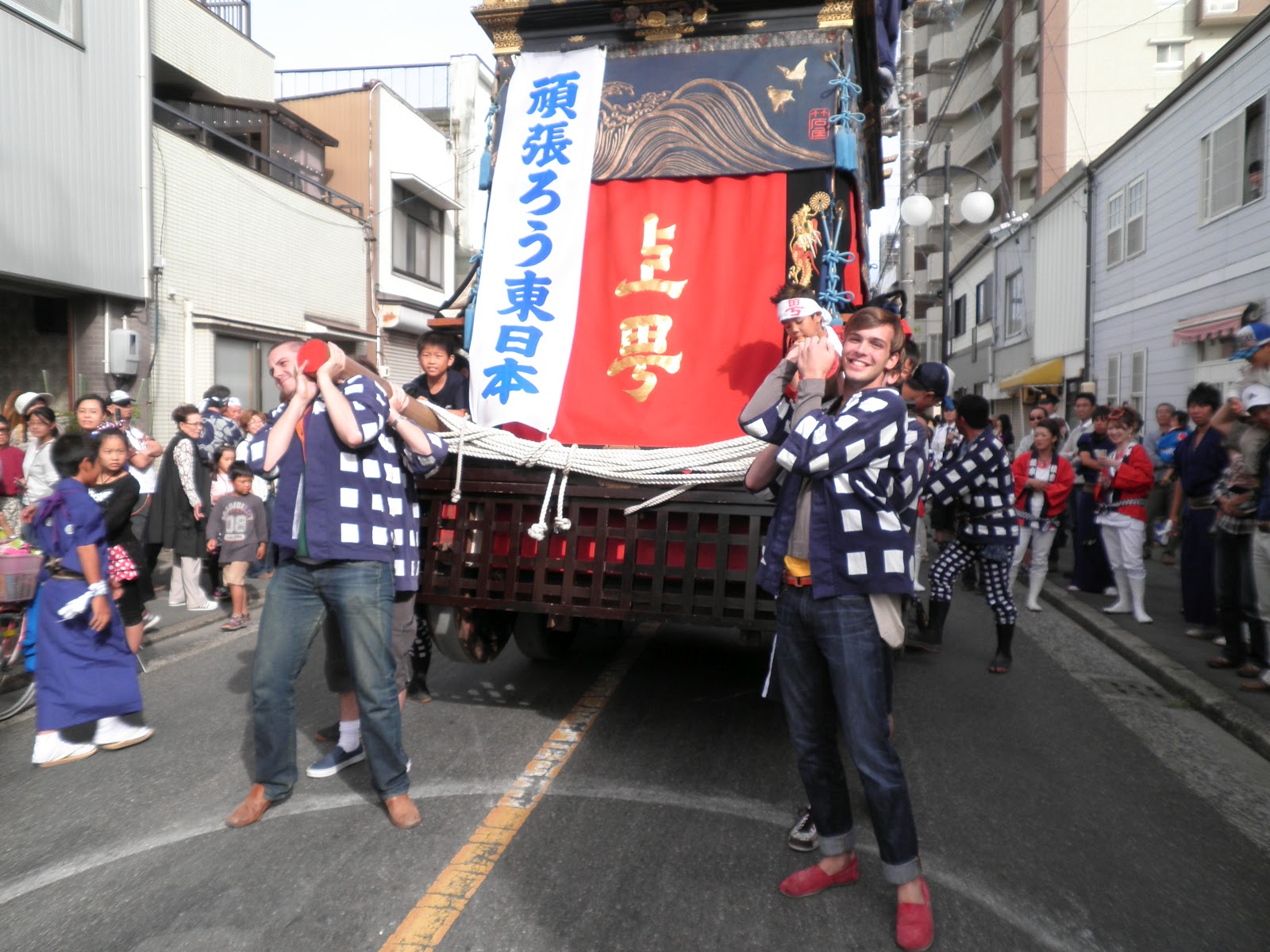
Another cool festival I went to was the Podunk Autumn matsuri 秋祭り. The festival's purpose is to appeal to the gods for good crops, particularly those of rice as the festival's timing is very close to that of the big rice harvest. In fact you can see the kanji character for rice, kome 米, on some of the ハッピ of the participants. At this festival, the shrines are contained within the dashi  山車 or 'mountain vehicles.' These elaborate wooden carriages are shaped much like a mountain with a couple of distinct tiers. Starting at the top, there is an area for a number of people to stand and sit. Up there are banners for the region from where the team hails, lanterns, decorations, and commonly, a huge doll in the shape of a priest. At times, the dashi are like mobile bunraku 文楽 (Japanese puppet theatre) shows at the top. The dolls themselves are controlled by the top tier inhabitants and they are sometimes made to throw confetti and I think rice too.


Going down, you will see the base of the mountain. This structure contains many intricately carved images if creatures (real and mythical) and plants. A bigger banner is usually attached (check out the photo). Housed within the central structure are many of the local children who periodically peek out pillbox style, claiming many victims through their drive-by of cuteness. Also housed at base level is a large taiko drum which is played throughout the day and particularly during the nighttime street parade. To the sides hang the traditional kane 鐘, metal cymbal/bell things that are played by girls and younger boys. The whole structure is set on 4 wheels and 2 wooden struts.


Podunk's claim to fame/originality is the practice of rotating the 山車. Just as there were many different teams in the Ohara Hadaka matsuri, the Podunk Autumn matsuri contains many teams from many regions within Podunk itself, and also from greater Aichi and neighbouring prefectures as I understood.


The dashi are towed around town and stop every now and then for, what I'll call, the rotation ritual. The men brace themselves for the hard work to follow, the kids peak their heads out in anticipation and the top tier inhabitants get ready to cheer and manipulate the puppet. The best place to see the rotation ritual is in the plaza outside the main train station. They are all spread out and it is easy to see the simultaneous spinning of a number of the 山車. The puppets are waving around, tossing confetti and the crowd is tripping over each other taking photos.

Upon the eventual march toward the Podunk Shrine, my "Japanese uncle" makes sure I and 3 of my foreigner friends get to take part, much to the curious delight of the locals. We are adopted into team Babacho, the region adjacent to the Podunk Shrine and which is made famous (locally) due to its old sacred tree. In a test of strength, we are asked to lift the front end of the heavy Babacho 山車, just the 4 of us. How do we fare? HINT: this is usually done by 6-8 men.... we FAIL. Though, we gather our chi and are very successful on the second try, hurrah! However, no time to celebrate as this is relatively easy compared to the rotation.


Soon after the warm-up act, we are tasked to rotate the 山車. It is an exercise in muscular endurance and ignorance of sustained, shoulder-crushing pain, especially if you've not much between your clavicle and ハッピ! We start out pretty well, our strengths vary a little as do our heights and positioning under the struts, so loads particularly with proximity to the vehicle and height of the participant. I am the tallest, so I got my fair share of the 'joy.'  I forget exactly how many turns are required, I'm recollecting anywhere from 8-12. When we started to go around, we were all surprised at the force we were working against, though we fight through the inertia and get it spinning.


The kids are cheering (maybe), the crowd is being sated and the local photographers are snapping away. We almost, almost complete the required rotations, but it goes down just short of the mark. We are encouraged and try once again and are better positioned and schooled. We get about 2/3 of the way through and are taught an interesting coping stratagem, "Look up and your pain will go away." So periodically we look up. How long before we realise that this is a hilarious placebo? I'm thinking that it clocked in at about 2 minutes, haha. Finally we get it around and then it is party o'clock. The onlookers applaud and our faces are beaming. Then we are offered a draught of deliciously blessed o-sake. They line us up one by one and I am literally lucky last, because being last, I got offered a double helping :D I was happy to oblige (read: indulge) and that garners more applause. What a fun time!


By night time the 山車 are mobilized once more with lanterns alight. In addition to the 山車 are some other lower set vehicles that also contain the taiko and kane. The drums and cymbals of traditional Japan beat and ring loudly across the town as the festival comes to an eventual close.


A really good time and I look forward to attending this year's installment later on in October.

Thursday, 22 September 2011

Word of the day 差し込む. Brought to you by naughty 1年生

Oh brother! Those bloody junior high boys. I had a funny interchange with a little group of 1年生 boys in between classes. It went something like this (translated because I love you):

Boys: Uuwah, Danieru sensei. Haroo.
Me: Hello there. What are you up to?
Leader boy: Nothing. Oh! Come, come.
Me: Where? (suspiciously)
Leader boy: To the joseiben! (Girls' toilet)+(Probably thinking, heh heh, doubt he knows that word)
Me: No chance! Bad! Danger!
Leader boy: Haha (damn he knew it), come on! It'll be grand.
Me: No chance, mischief maker (I am fond of using the word 悪戯者・いたずらもの which can mean prankster, mischief maker--> be careful, it can also mean loose woman--> mental note to use this only to males, haha)
Me: So what's your next class?
Boys: Science!
Leader boy: Sashikomi, sashikomi!
Me: Huh? What's this sashikomi mean?
Leader boy: Mwuhaha, SASHIKOMI, SASHIKOMI!! Haha.
Me: (takes out electronic dictionary) Sashikomi, eh? Surely this is a dirty joke (下ネタ).
Boys: HahahahHAhHAhaha. He knows 下ネタ!
Me: Insertion. さすが (just as expected)
Boys: **ROFLing at my disappointed (but slightly amused) face**

So 差込 or 差し込む meaning to insert, "thrust in" etc. So to all my fellow ALTs on the frontlines, if you hear sashikomi, get ready to ask, 下ネタですか (shimoneta desu ka?). Little buggers will get a kick out of it, and so should you, seeing their reactions.

Haha, until next time!
Daniel.


Monday, 15 August 2011

G'day Japan! Part 2- ただいま (Here I am!)

With the balloons popped, the music attenuated and the goodbyes done with (excepting one), I found myself at the dawn of the day that I would be going to Japan. A good friend offered a lift to the airport and this was almost my undoing, haha. My friend had an unfortunate locking of the keys in the house incident leading up to check-in time!! A quick scramble however had me making alternate arrangements and all was peachy again.

I met up with a lot of my fellow JETs at the Brisbane domestic (we had to go to Sydney first-blehh let's travel away from our final destination first-woot!) and I got to meet boyfriends, mums, dads, friends et al. which was kinda heartwarming. I enjoyed seeing the spark of pride in the eyes of the dads and the mums of the other JETs. At check-in time I said my final goodbye :(

Before long we were descending into the metropolis of Tokyo. On descent a flood of memories 2 years past came back to me. I remember my first descent into this wonderful city. It was night and the vastness of the lights was mesmerising. The seemingly endless scale of construction was a little scary. How could they power all these cells of humanity and industry? Seeing the vast residential sprawl on my first train ride from Narita to Tokyo reinforced the scale of life in the metropolis that holds roughly the same population as that of my home country of Australia.

Anyway, I digressed didn't I? This time around, I was greeted with a hot and humid Narita morning. After we got our luggage, a good Brisbane JET friend of mine, 'Mie L', and I finally met 'Aichi P', a friend that we made through the forums. He gave us each a 扇子/sensu (Japanese folding fan), which was an awesome welcoming gift that we put to use pretty darn promptly. Mie L and I boarded the bus bound for swanky Keio Plaza. The reality of being in Japan really started to hit on this bus ride. The alien boxy cars, the architectured roadside 緑/midori, the abundant baseball fields, the unfamiliar plantlife, and of course, the signage in asian characters, all together made it sink in.

We got to the hotel and almost everywhere we went there was a smiling Tokyo Orientation Assistant pointing us in the right direction. It felt very heartening to be greeted in such a way by the cornucopia of friendly assistants. After we got settled in, a group of us went out for errands, shopping and lunch. I got a small suitcase to replace my massive carry-on eco bag which had thoroughly 'exploded' by that point in the journey. Lunch at さら福や, Shinjuku was a little bit spectacular. I had a set meal (定食) of Okhostk Mackerel (ほっけ), tofu, rice, salad, miso soup, some delicious seaweed thing and a fruit jelly. It was an awesome first meal in Japan. Later that night, we were feeling pretty tired and ended up having a few quiet ones in the hotel. I discovered Asahi Blue label, a brilliant drink.
ほっけ定食 Mackerel Set Meal


The next day was the start of the business end of the orientation. The opening presentations were very good and the mood, despite being official, was counterbalanced with the humour and occasional anecdotes of the presenters. The same day, I met all my fellow newbie Aichi Prefecture JETs which was great; a mixture of cool people from America, America, & America. Day 3 was full of workshops. The ones that I attended were pretty well done, especially the team teaching and teaching to children with disabilities workshops. That night we got to visit the Australian Embassy in Tokyo. That was a really good time. I actually bit the bullet and talked to the big wigs during meal time. They were really friendly, it was just like talking to anyone I have ever met back home as they certainly retained their laid-back, approachable Australian-ness.

The Aichi massive
Brisbane JETs on Embassy visit night.
On the final day we packed up, said goodbyes to our fellow Brisbane JET buddies and flew or shinkansen-ed to our respective posts. I finally met my supervisor and another one of my fellow JETs from 'Podunk' (NOTE: in the interest of protecting everyone's privacy I have chosen to not use my region's proper name). The day was spent setting up house, registering for the alien card, bank account etc., and going out to eat with my fellow Podunk JETs.

And so started my Japanese life. So, what of my posting? Well, my area abounds in rice paddies (they are called 'tanbo' / 田んぼ) which to me hold a special charm of their own. I've found myself often riding home at night (if you do the JET program you will surely spend your initial few days/weeks going out to eat and drink) and as I approach my home, the wind often blows through the tanbo making the rice plants dance, and seemingly, whisper to each other. It's really nice. The novelty of the birds and plants that are alien to my Australian eyes, remains strong still. I often see what I am convinced is the same big ol' Japanese crane having a late night fish in the channel near my house. Damn thing scared the jiminy crickets out of me the first time I saw it, but now I get disappointed whenever it isn't there to say 今晩は/goodnight to, haha.

Turning the key for the first time in my new apartment
My god, the food is ridiculously good. There is no understating the sheer variety of Japanese cuisine. Just like learning Japanese (or any other language for that matter) is a lifelong practice, the same could almost be said for the discovery of all the regional Japanese cuisines and their variants. I guess I will do a brief food blog later-ish, just showing all the different dishes I have encountered so far. One theme that I really enjoy about Japanese (and pan-asian cuisine really) is the interactivity of meal time. By this I mean the options of the diner/s to cook, flavour, mould, fashion etc. their meal by themselves. From shabu-shabu (しゃぶしゃぶ) through to D.I.Y. takoyaki (たこ焼き), Japanese dining is indeed a fun affair.

So now's a good time to stop this installment. There is definitely a need for a G'day Japan Part 3. Next time I will get more into the specifics of school life and the fun outings I have been indulging in.

Well until then, thanks so much for reading. Much love to friends and family back home and my continued thanks to anyone else that stumbles upon and reads my entries.

Thanks again :)

Saturday, 6 August 2011

G'day Japan! Part 1-Bye Bye for now Australia.

Damn! The month of July just flew right past. Needless to say, I have been a busy boy, taking care of (in a roughly correct order): finishing up at work, administrating my move from A->J, taking part in official functions, saying goodbyes, saying hellos, attending official functions II, going out to not so official functions, heading out to my new home, meets-greets-and-eats, SHOPPING, school etc.

Glad to say, though, that my writing やる気 is back!

So, hey! Let's start from my last few weeks in the country! June and July were composed of many JET functions and workshops. I was entirely impressed with the group of fellow Brisbane JETs, they were all cool people and after a few workshops together we were pretty good friends. Mostly composed of genki dudes and dudettes, we found a small group of us regularly going out on Fridays (after the workshops) to restaurants and on one occassion a club (Jade Buddah, woot!) The Brisbane Consulate of Japan, thanks to an amazing coordinator, ran a series of excellent, informative workshops on teaching, living, surviving etc. in Japan. Our schedule of things to do rounded out with a visit to the swanky residence of The Consul General in Hamilton. We were pretty lucky to get the privelege.

I am cool. A 7 year said so, so there!
July also saw me finishing up at work. I was sad to say goodbye to the kids at my tutoring job. Especially sad to say goodbye to a few of my little J-culture gang. I was teaching some of them to say おす/osu with a martial arts stance thing going on. It was our little thing that we had, you know? A cheesy, fun little thing. One of the girls was very impressive, making up this part martial arts, part party rock anthem shuffle thing. She called it "everyday I'm osu-ling" replete with shuffling and karate chops, my god(!) it was hilarious. You had to be there. Also loved watching one of the cutest little dudes attempting a flying kick. He managed to jump, maybe, 15 lionhearted centimetres off the ground and kick a stubby legg-ed, 30-degree-from-the-vertical 'flying' kick. Wicked cute!

JapanesePod101.com study group last day.
I was pretty bummed to have to finish one of my little initiatives, the JapanesePod101.com study group. It was a humble little group of dynamic fellow Japanese and English learners. I will especially miss the conversations that we had about our respective languages. Sometimes it was over the top (hilariously so), but I think that both my treasured Japanese participants and fellow Australians, Koreans, Malaysians, Frenchmen etc. got a lot out of the sessions. It is great to know that there exists a genuine interest in language and culture in my community. Thanks a lot guys!


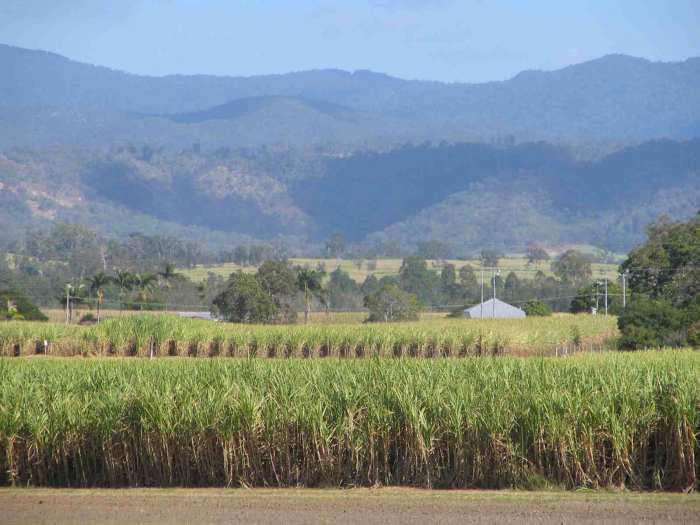
 Next thing was my visit to my parents' place in the dormant volcano region of Childers, home of sugar cane, an obscene 'modern art' eyesore, country town gossip, backpackers and, of course, red dirt (don't forget the red dirt!) I spent a leisurely few just taking in the country scenery of the family farm and saying hello to my pups. I finally got a chance to show the folks the JET introduction video which was a great time. It suddenly became real once we got to see the everyday lives of a variety of participants in a variety of contexts. It really was put together very well and we all enjoyed watching that.


Another great experience of Childers was my final (for a long while) drinking session with gracious host, 'B', the parents and a few others at a neighbouring cane farm property. It has become tradition to go and have drinks, share dirty jokes and have some genuine belly laughs up at "B's Beer and Bullshit Bar" (alliteration fans rejoice!) whenever I get up to Childers. That was a hoot as always.


\


On return from Childers, I hurriedly tied up loose ends and had a fun little going away party on the evening before departure day. It was a shame that a fair contingent of buddies were overseas at the time of the party, but I had an absolute blast with the rest of the great mates I have made in Brisbane over the last handful of years. We enjoyed dinner, drinks, listening to awesome tunes, doing the コマネチ and doing some 書道 calligraphy. It was a nice send off, so thanks for coming guys! 
 
KOMANECH!!


All the shodo calligraphy we did at the party.

Well that is the end of Part 1. Thanks very much for reading. Please tell your friends about this blog, +1, leave a comment etc. Look forward to Part 2 very soon :D Cheers!


Tuesday, 14 June 2011

オーストラリアを建てている:NSW州のスノーウィーマウンテンズスキーム。 Constructing Australia: NSW's Snowy Mountains Scheme

第二次世界大戦に続いて、戦後の建設と発展には大量のエネルギーが必要とされました。1949年に、ニューサウスウェールズ州のマレーとマランビージー地域に灌漑の水源を備えるため、また安価な水力発電のエネルギーを発電するために、山間部の水を利用するスノーウィーマウンテンズスキームと言う計画が作られました。 この多目的な、マルチ貯水池システムは、3200平方キロメートルにわたり 、10万人以上の労働者を動員し、25年間もかけて建てられました。 計画開始の時点では、熟練した国内労働者が不足していたので、熟練した外国人労働者を募集するキャンペーンが始められました。この計画と連邦政府の移民計画が、互いに、多くの外国人の家族の移民を促進しました。 総労働人口の3分の2は外国人労働者で占められました。 移民の大半は、ヨーロッパの中央と東からやってきました。 これらの家族の多くは、戦争で荒廃した国を脱出していたので、新しい生活を探していました。 興味深いことに、計画の設計者がノルウェー人、コミッショナーがニュージーランド人、技術長がアングロ・インディアンでした。 地方の団体が、様々なクラブや協会を形成し、文化や英語の授業を無料で提供することによって、移民がオーストラリアの生活習慣に融合することを手伝いました。 ブッシュ詩人のバンジョーパターソンの詩と「スノーウィーリッバーからの男」と言う映画も、スノーウィーマウンテンズスキームの熱心な勤労者から刺激を得て生まれました。 彼らはその地域のために素晴らしい仕事を行い、そしてまた、オーストラリアの歴史の重要な一部です。 

Following World War II, post-war construction and development required a high amount of energy. In 1949, the Snowy Mountains Scheme was established in NSW to utilise the waters of the high country regions to irrigate the Murray and Murrumbigee areas and to cheaply generate large amounts of hydro-electric energy. The multipurpose, multi-reservoir system covers 3200km2 and was built by over 100,000 personnel over a 25 year period. At the time of the scheme's inception, there was a national shortage of skilled personnel, so a campaign to recruit skilled foreigners began. Together with the Commonwealth Government's Immigration scheme, the project facilitated the immigration of many foreign families. 2/3 of the final workforce was composed of foreign workers. The majority of the immigrants came from Central and Eastern Europe. Many of these families were escaping their war-torn countries and were looking for a new start in life. Interestingly, the designer for the scheme was a Norweigan, the first Commissioner was a New Zealander and the Chief Engineer was an Anglo-Indian. The migrants were assisted by local organisations in their assimilation into the Australian way of life by forming various clubs and societies and by providing free cultural and English language education. The hard workers of the Snowy Mountains Scheme inspired poems by bush poet, Banjo Patterson and later, a film called The Man from Snowy River. They did a great job for the local region and are an important part of Australian history.

References
"Building the Snowy Scheme - A multi-cultural experience," Snowy Mountains Hydro-Electric Authority. Retrieved from http://www.multiculturalaustralia.edu.au/doc/snowysch_3.pdf

McHugh, S The Snowy: The People Behind the Power, Melbourne, Heinemann, 1989.


Wednesday, 18 May 2011

A (brief) Australian lifestyle case study: living in the rural community of Childers あるオーストラリアの生活様式についての(小さな)ケーススタディー:チルダースの農村に住んでいます (In English and 日本語で)

チルダースの人口は、他の多くの農村のように、とても少ないです。 地元の住民がメインの町に行ったとき、知っている誰かに偶然会えば、それぞれの農場や事業、うわさなどについての会話を交わすのは間違いないです。チルダスでの受けられるサービスは限られているので、専門医師などからのサービスを受けるためには、バンダバーグやハービーベイなど近隣の都市に行く必要があります。 このような移動は、オーストラリアの小さな田舎町に住む一般的な必要条件です。 チルダースには、2つの小学校と唯一の高校、イシス高があります。チルダスの60キロメートルの半径内には既存の小さなコミュニティがいつくかあり、 それらと一緒に、イシスと言う地区を構成しています。 ちらばっているそれぞれの地域はかなり小さいので、小学校を卒業したら、5つの地域の学生はイシス高に入学しなければなりません。 チルダス地域ではさまざまな 果物や野菜が栽培されていて、このために、多くのバックパッカーが作物の収穫の仕事をするためにそこに滞在します。 チルダースはまさに オーストラリアのサラダボルの一例です。自然に囲まれ、また、海に近い場所などという理由が、 子供達がチルダースで生長するいい地域として認証されています。 そこに住む学生にとって、 学校が休みの間に、作物の収穫の仕事をするのお金を稼ぐためだけではなく世界中からのバックパッカーと会うためのとても良い方法となっています。 田舎の生活には多くの利点があると思います。 皆はどう思いますか?

Childers, like many other rural communities, has a very small population. When the locals go down to the main township, you can be sure that they will run into somebody they know and strike up a conversation about their respective farms or businesses and also swap the latest gossip they have heard around town. Services in Childers are limited, so it is often a requirement to travel to the city of Bundaberg or Hervey Bay in order to seek out services such as specialist doctors. The need to travel like this is a common requirement for small rural towns in Australia.

In Childers, there are 2 primary schools and only one highschool, Isis High. There are a number of small communities existing within a 60km radius of Childers, with them together making up the Isis District. Because these neighbouring communities are so small, students from 5 of them have to attend Isis High when they graduate primary school.
A variety of fruits and vegetables are grown in the Childers area and because of this, there are many backpackers that go there for picking work. Childers is indeed a prime example of the Australian 'Salad Bowl' (or 'Melting Pot'). The natural surroundings and close proximity to the coast make Childers a great place to grow up in. Taking a holiday job during school holidays is a great way for local students to not only make money, but meet backpackers from all around the world. The country life has many advantages. What do you think?

Wednesday, 30 March 2011

Classroom Curveball

So there I was at my tuition school today, a pretty average day really except I had fewer students to supervise than usual. I am relishing this formative experience of teaching children and today I had a bit of an experience which almost took me out.

So one of my students is happily working on his computer program, dutily (and vocally) sounding out his words as he was progressing through the spelling activities. He had knocked down some toughies such as 'knee' and 'cough' before coming to 'I'. He commented something like, "I? Pfft, that's too easy!" I agreed, before he reasoned, "There is 2 different I's isn't there?", referring to eye and I. Then he abruptly says, "I have cancer." In the space of maybe 2 seconds I went from curiosity, through to horror and then finally to tentative understanding as I got reacquainted with his slightly irregular right eye.

"Well, I HAD cancer." Best I could offer was "Oh no, did you?" rejecting my initial instinct to say "Oh! How horrible!" "But they cut it out and I am blind in one eye." At this point my heart was sliced in two and I was terrified at what to do next. "Well, you've had to be very brave haven't you? I sure am glad that you are here with us today having fun learning spelling!"That last bit, I think I could have done better and I continue to do a "mind-groan" everytime I replay it. However, the child, whom appeared so mature and calm about telling me the story, did not resist and jumped straight back into the spelling activity.

It was all so out of the blue and trying to read the child and work out why they would tell me this after only knowing me for 2 lessons is really difficult. Children obviously don't censor themselves like adults do and they are learning social mechanics at a much higher rate, which naturally comes with experimentation of how to act and what can, should and shouldn't be said in varying situations. One thing that stuck out in the interchange was the tone of his voice and the way he was scanning me with his one working eye. I am so sure that he threw it out there to see how an adult reacts to the situation in order for him to gauge how bad it is in an adult's mind, and from this, add it to the numerous other reactions and judgements that he has come across, to steadily construct how bad the impact of this ailment really is on his life.

I still don't understand kids very well, but what I do know is that kids are built pretty damn mature these days.

Thursday, 24 March 2011

Recently has been going decently

So, I have been going a little stir crazy since finishing up at uni last year. I have been actively looking for work, but since silly old honest me has been throwing out the whole YOU-CAN-ONLY-HAVE-ME-UNTIL-JULY disclaimer at every job interview, employers are picking the "safer-bets". So yeah, this has kept me jobless for quite a few weeks and this can make one feel a little unloved and redundant, so it was with absolute glee that I finally suceeded in getting a tutor position with a local tuition business.

I have been working as a casual tutor for a few weeks now and it has been great to feel useful once more. On top of that, I am happy that I get to develop some teaching skills. The role ranges from simply supervising students as they work through literacy and numeracy computer programs through to one-on-one tutoring. I am a Biology major and have offered to tutor many subjects for one-on-one including Chem, Phys, Biol, Maths, and as a punt, Japanese.

The little punt paid off and I currently get to tutor one student in Japanese which thrills me no end because A) I need to hone my language teaching skills for my English teacher role this year; and B) I looove getting paid to talk and teach Japanese (I think this may be what I want to do later on down the track, and yes, despite the Science degree thing :P). Generally, the one-on-ones are better as the students are pretty darn willing to learn (which is good because the parents are paying a damn premium for the privelege).

So, yes, I am pretty happy that I am in this line of work at the moment as I continue to wait in agony for the results of the JET interview. The results usually come out mid-April, so it will be good to have this to distract me. I hope all the other JET hopefuls are coping with their epic waits.

Please look forward to some more interesting blogs very soon!!!

Dan xox

P.S. If you haven't already, be a good global citizen and donate money to the Tsunami appeal if you haven't already! Additionally, you can check out the partners for Japan channel at ---> http://www.youtube.com/user/partners4japan . Simply watching videos on this channel will magically generate revenue for the relief effort. Good on you me hearties :D